
"2.5 million"
600 article(s) found
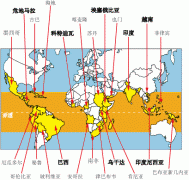
Coffee producing area worldwide 53 coffee producing areas Salvadoran coffee pizza
El Salvador's unique, mild coffee. El Salvador is one of the small countries in Central America with a dense population. The flavor of its coffee is characterized by excellent balance. Today, this coffee accounts for 40% of the country's exports. 35% of the extra hard beans of the best coffee are exported to Germany from January to March. In the early 1990s, the guerrilla war wreaked havoc

PNG allows small coffee growers to export products directly.
The PNG coffee industry, which began with the introduction of seeds from Jamaica in 1926-27, is now the second largest export agricultural product after palm oil (9.47,0.18,1.87 per cent), with a working population of about 2.5 million and a planting area of about 87000 hectares.

El Salvador Coffee A brief introduction to Coffee in Santa Teresa Coffee Manor
Following Kaiping (official Wechat account vdailycom) found that the Beautiful Cafe opened a small shop of its own in the early 1990s, and guerrilla warfare greatly damaged the country's national economy, reducing coffee production from 3.5 million bags in the early 1970s to 2.5 million bags in 1990-1991. The eastern part of the country was most affected by guerrilla warfare, and many farmers and workers were forced to leave the manor. The shortage of funds resulted in

Introduction of Starbucks Sumatra Coffee Bean semi-washed Flavor Price Manor
Washing is the most technical way to pick up beans, and the quality of coffee is ensured through multiple sieving procedures. First move the red fruit and half-green and half-red fruit that have sunk into the sink into a large or medium-sized pulp screening machine (PulpingMachines). It is so cleverly designed that the mechanical force presses the fruit against one side of the sieve hole, which is exactly the size of the pod (coffee wrapped in sheepskin).

Introduction to the characteristics of the treatment methods of grinding degree for describing the flavor of Ugandan coffee
Uganda's coffee production ranks first in Africa, accounting for more than 70% of its total exports. Uganda is also the hometown and main producing area of Robes specialty coffee. In the 1960s, Ugandan coffee production remained at 3.5 million bags a year. By the mid-1980s, coffee production had dropped to 2.5 million bags a year, mainly for political reasons. But now coffee production is on the rise again, which is large at present.

Guatemalan coffee plantation
Locals call it the The Project project, which plans to invest $2.5 million to encourage the opening of small, high-quality coffee plantations. The main areas rich in high-quality coffee in Guatemala are Lake Attilan (Lake Atitlan) and Huehuentenango. The purpose of the project is to help overcome the high-yield and low-quality evil that has plagued the world coffee industry.

Geographical location of Salvadoran coffee
El Salvador (ElSalvador) is one of the small countries in Central America, where coffee is light, fragrant, pure, slightly sour and characterized by excellent balance of flavor. It is a specialty of Central America. With sour, bitter, sweet and other taste characteristics, the best baking degree is moderate, deep. Salvadoran Coffee-Coffee originated in the early 1990s, guerrilla warfare greatly damaged the country's national economy.

El Salvador Coffee Bean Flavor Description Taste Manor Region Processing Method Grinding Scale Variety Introduction
El Salvador Coffee Bean Flavor Description Manor Production Area Processing Method Grinding Scale Variety Introduction Guerrilla warfare greatly disrupted the country's national economy, reducing coffee production from 3.5 million bags in the early 1970s to 2.5 million bags in 1990- 1991. The eastern part of the country was most affected by guerrilla warfare, and many farmers and workers were forced to leave their estates. A shortage of funds caused coffee production to plummet,

Current situation of McDonald's Development in China number of McDonald's restaurants McDonald's China launches migrant worker Program
In November last year, McDonald's invested 2.5 billion yuan to sell coffee, and this year McDonald's began to play a new game. Recently, McDonald's China launched a guarantee scheme for workers. What is the guarantee scheme for workers? Working well and doing a good job, the guarantee plan for migrant workers refers to providing round-the-clock and uninterrupted value concessions in multiple platforms and scenarios to fully support the rework of migrant workers. According to

Aromatic, pure Salvadoran coffee beans Flavor Description Grind Scale Variety Taste Introduction
Aromatic, pure Salvadoran coffee beans Flavor Description Grind Scale Variety Taste Description Salvadoran coffee is a specialty of Central America, where the coffee body is light, aromatic, pure and slightly acidic. Like Guatemala and Costa Rica, coffee in El Salvador is graded according to altitude, with the higher the altitude, the better the coffee. The best brand is Pipil, which is a

Introduction to varieties of grinding scale for flavor description of El Salvador boutique coffee beans
El Salvador is one of the small countries in Central America with a dense population. The flavor of its coffee is characterized by excellent balance. Today, this coffee accounts for 40% of the country's exports. 35% of the extra hard beans of the best coffee are exported to Germany from January to March. In the early 1990s, guerrilla warfare greatly damaged the country's national economy and increased coffee production from the 1970s.

Guatemala Coffee Manor Ladisa Manor Guatemala Antigua Coffee beans
Most small-scale producers are descendants of the Mayan, who like to be called locals. Currently, they are also benefiting from a U.S.-funded project that locals call The Project, which plans to invest $2.5 million to encourage the opening of small, high-quality coffee plantations. The main area rich in high-quality coffee in Guatemala is Atit.

Introduction to the characteristics of El Salvador Himalayan Coffee Flavor varieties
El Salvador (ElSalvador) is one of the small countries in Central America, where coffee is light, fragrant, pure, slightly sour and characterized by excellent balance of flavor. It is a specialty of Central America. With sour, bitter, sweet and other taste characteristics, the best baking degree is moderate, deep. Salvadoran Coffee-Coffee originated in the early 1990s, guerrilla warfare greatly damaged the country's national economy.

Characteristic Source practice of Guatemalan Coffee
Currently, they are also benefiting from a U.S.-funded project that locals call The Project, which plans to invest $2.5 million to encourage the opening of small, high-quality coffee plantations. The main areas rich in high-quality coffee in Guatemala are Lake Attilan (Lake Atitlan) and Huehuentenango. The purpose of the project is

Introduction to the description of taste and flavor of El Salvador Himalayan coffee
In the early 1990s, guerrilla warfare greatly damaged the country's national economy, reducing coffee production from 3.5 million bags in the early 1970s to 2.5 million bags in 1990 and 1991. The eastern part of the country was most affected by guerrilla warfare, and many farmers and workers were forced to leave the manor. The shortage of funds has led to a sharp drop in coffee production, from 1200 kg per hectare in the past to less than 9 per hectare today.
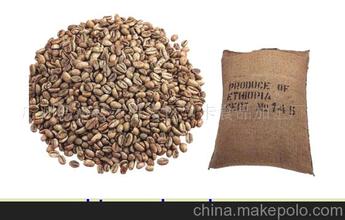
Flavor description of El Salvador Himalayan coffee beans with mild taste introduction to grinding scale varieties
El Salvador is one of the small countries in Central America with a dense population. The flavor of its coffee is characterized by excellent balance. Today, this coffee accounts for 40% of the country's exports. 35% of the extra hard beans of the best coffee are exported to Germany from January to March. In the early 1990s, guerrilla warfare greatly damaged the country's national economy and increased coffee production from the 1970s.

Introduction to boutique coffee with flavor and taste characteristics of El Salvador Himalayan coffee varieties
In the early 1990s, guerrilla warfare greatly damaged the country's national economy, reducing coffee production from 3.5 million bags in the early 1970s to 2.5 million bags in 1990-1991. The eastern part of the country was most affected by guerrilla warfare, and many farmers and workers were forced to leave the manor. The shortage of funds has led to a sharp drop in coffee production, from 1200 kg per hectare in the past to no yield per hectare today.

Description characteristics of flavor and taste of Ugandan coffee brief introduction of manor planting varieties in producing area
The cultivation of coffee in Uganda is all small-scale family operation. The livelihood of 25% of the population is closely related to coffee production. About 500000 farms grow coffee, but mainly Robster. Robster accounts for 90% of coffee production, and the remaining 1 is Arabica coffee. Arabica and Live Buster are harvested from October to February of the following year. Ugandan coffee

Guatemala coffee beans origin characteristics Starbucks caramel macchiato method
They are also currently benefiting from a US-funded program known locally as The Project, which plans to invest $2.5 million to encourage small, high-quality coffee plantations. The main regions of Guatemala that produce high-quality coffee are Lake Atitlan and Huehuentenango. the aim of the project is

Delicious Sumatran Coffee Flavor and Taste the characteristics of the manor area introduce the fine coffee beans
Holding a large cup of Sumatran coffee, a wonderful warmth and mellow smooth feeling arises spontaneously. To me, this feeling is different from any other coffee. After drinking this wonderful brew of coffee for the first time, I feel comfortable and refreshing. In this wonderful experience, I slowly relaxed, completely immersed in this moment, my thoughts drifted far away, and then a drop of coffee spilled unwittingly.